
Hard-Sided Enclosed Car Transport: What to Check
In Russian car transport, delivery 'in a safe' refers to a carrier with rigid walls and roof and a lockable body. It is enclosed transport rather than a separate service category.
In Russian car transport, delivery 'in a safe' refers to a carrier with rigid walls and roof and a lockable body. It is enclosed transport rather than a separate service category.
Advertisements may also call curtain-sided equipment or covered cars on open platforms 'enclosed'. Check the actual body and loading arrangement before choosing.
What a hard-sided carrier provides
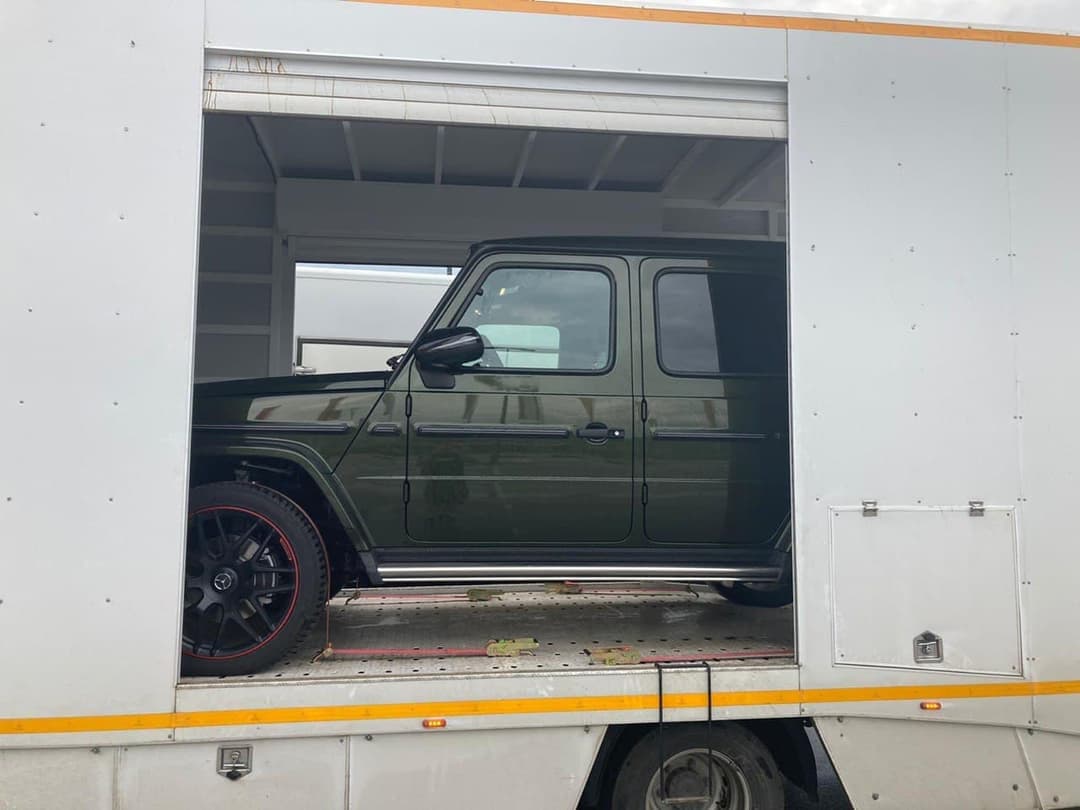
The rigid walls, roof and doors enclose the car, which is secured at its wheels on the floor. From outside, the closed van conceals its load.
The photograph shows our opening-side van and perforated floor used for securing points. Another van has a six-metre body with 2.40 m headroom, a roller shutter and a rear hydraulic platform that raises the car horizontally.
Types of covered car transport
Covered transport varies by capacity and body construction.
- A single-car enclosed van carries one vehicle on a dedicated journey.
- Two–three-car enclosed equipment can use a truck and trailer or articulated format, with hydraulic deck movement.
- Six–eight-car enclosed trailers handle shared journeys and groups.
- Curtain-sided equipment uses fabric over a frame.
- Some two-deck carriers cover only the lower row, leaving the upper deck exposed.
More about the service: Enclosed car transport.
Curtain-sided and rigid bodies
Fabric-covered bodies and sliding curtains provide weather protection but differ from a rigid lockable body.
- Fabric can move in the airflow and gaps can admit dust.
- Fabric offers less resistance to unauthorised access than solid locked walls.
- If only the lower deck is covered, check where your car will stand.
A car cover on an open transporter
A cover can protect a parked car from dust but moves in road airflow. Dust beneath moving fabric can rub exposed paint edges, and a poorly secured cover can flap or come loose.
Fabric does not provide the same barrier against road debris as a carrier body, and the outline remains visible. A cover is usually unnecessary inside an enclosed body.
Benefits of rigid walls and roof
A rigid enclosure separates the car from direct road exposure.
- It shields the vehicle from direct rain, snow and winter road spray.
- Walls and roof provide a barrier against road debris.
- The closed body conceals the car and can be locked at stops.
- The vehicle avoids the road dirt an exposed journey can collect.
Checks before booking
A description alone does not establish the equipment. Ask about the body, loading and securing together.
- Request exterior and interior photographs showing rigid walls and roof.
- Check whether the specific deck is enclosed on two-level equipment.
- Ask about a hydraulic lift or ramp approach angle for a low car.
- Confirm soft wheel straps and stops.
- Request the carrier's insurance limit and terms.
- Agree inspection reports and photographs at collection and delivery.
Booking enclosed transport
Send the model, addresses and date. The planner can compare a dedicated van with a shared enclosed space where dates and availability permit. Express dispatch within 24–48 hours and an arrival date in the contract are agreed for confirmed bookings.
The car is inspected and photographed at both ends. GPS tracking is available in transit and carrier liability cover is up to €400,000 under the applicable CMR terms.
Plan your car transport
Send the car model, addresses and date. We will explain the carrier construction, loading method and suitable dedicated or shared options.
Contact usFrequently asked questions
What does transport 'in a safe' mean?
It is a colloquial description of a lockable car carrier with rigid walls and roof, rather than a separate service.
How does a curtain-sided carrier differ?
It uses fabric over a frame rather than rigid walls, with different dust, access and weather-protection characteristics.
Can a cover be used on an open carrier?
It can, but moving fabric may rub paint and does not provide the protection of rigid walls against debris.
Which enclosed formats are available?
Single-car vans, two–three-car carriers and six–eight-car trailers, alongside fabric-covered equipment whose construction should be checked.
How can I verify the carrier type?
Ask for inside and outside photographs, loading and securing details, and confirmation that your deck is fully enclosed.