
How an Enclosed Car Carrier Works: Loading and Securing
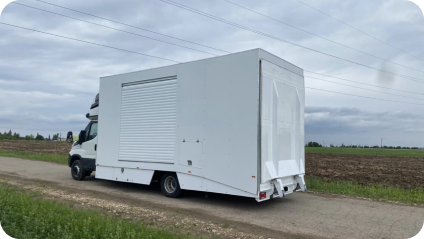
From outside, an enclosed car carrier resembles a box van with solid walls, roof and doors. Owners often ask what is inside, how a car enters and how the driver gets out.
From outside, an enclosed car carrier resembles a box van with solid walls, roof and doors. Owners often ask what is inside, how a car enters and how the driver gets out.
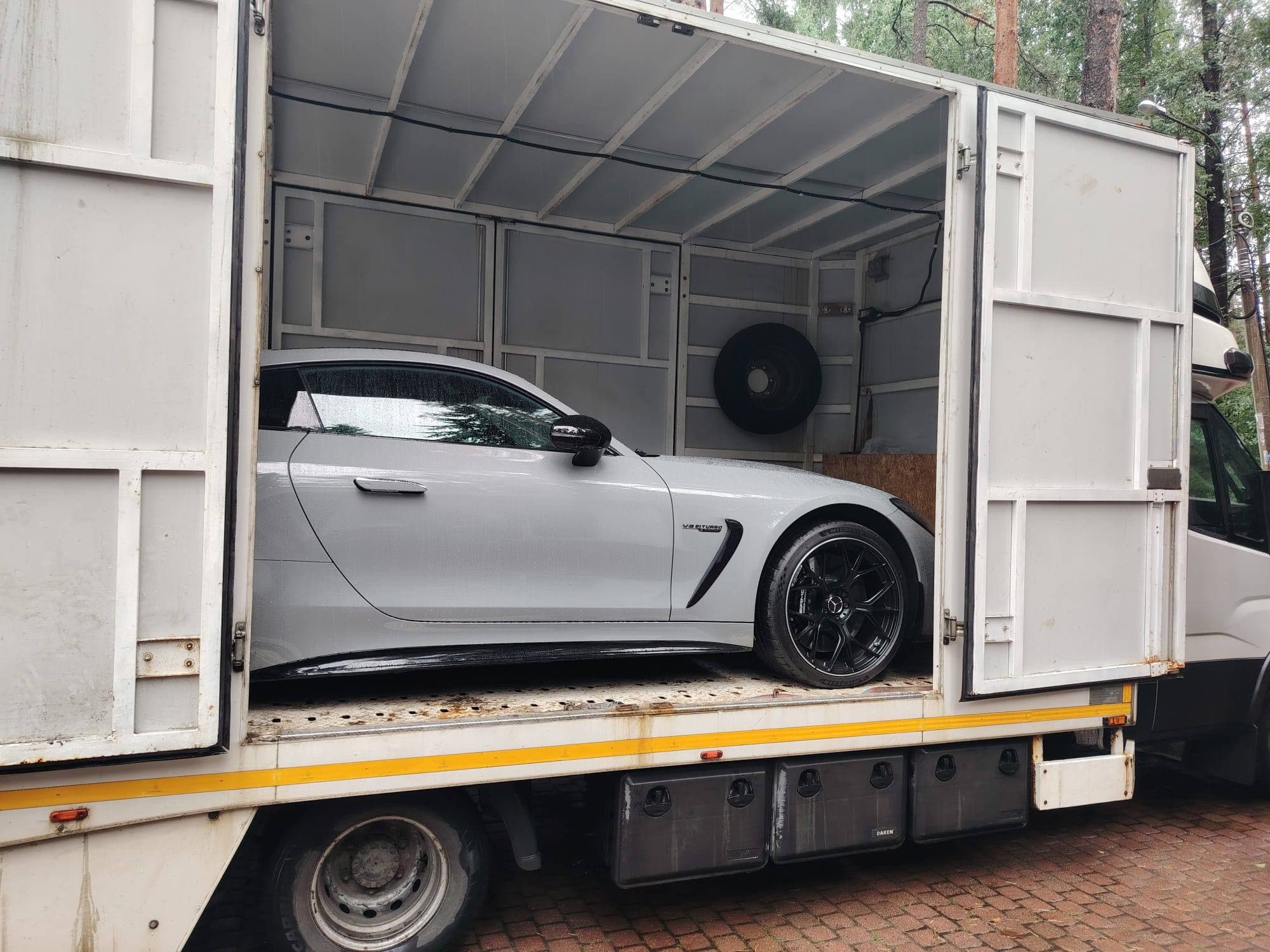
Our Mercedes-AMG GT shipment from Moscow to Saint Petersburg illustrates an opening-side single-car carrier.
Inside the enclosed body
The body provides a level floor, rigid walls and a roof without windows, shielding the vehicle from direct road spray and debris.
A perforated floor provides securing locations so straps can be positioned for the actual wheel locations. Equipment such as the carrier's spare wheel is secured separately.
The van in the main photograph opens along its side as well as at the rear, providing loading and driver access.
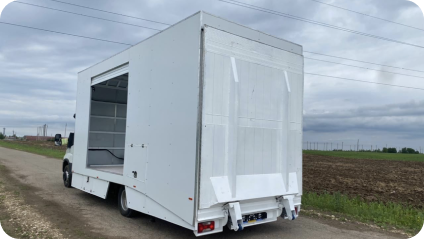
Another van uses a six-metre body with 2.40 m headroom, side roller shutter and rear hydraulic lift. Confirm vehicle height and other dimensions before choosing it.
Carrier capacity
Capacity affects the cost per car and scheduling flexibility.
- Single-car vans: dedicated transport and access to some sites unsuitable for a large trailer.
- Carriers for two or three cars: truck-and-trailer or articulated equipment, often with hydraulic deck movement.
- Larger enclosed trailers: commonly six–eight cars; ten-plus capacities are more typical of open equipment.
More about the service: Enclosed car transport.
How the vehicle enters
A running car can use suitable ramps at minimal speed while clearances are monitored outside. A non-running vehicle requires an agreed winch arrangement, identified before dispatch.
A hydraulic platform lowers to ground level, receives the car and raises it horizontally to the floor height before the vehicle moves inside.
Some multi-level carriers similarly raise a platform with the car on it rather than driving it up a steep ramp.
Low clearance and sports cars
The transition from ground to ramp is important for a low front overhang. A splitter can contact it before the wheels reach the ramp.
A suitable lift avoids that inclined transition. With ramps, extensions or pads can provide a shallower approach. Use a front-axle lift system as agreed if fitted.
The photographed Mercedes-AMG GT has 295/30 R21 low-profile tyres and delicate spokes. Straps should sit on the tyre tread without touching the rims.
How the driver gets out
An opening side or raised roller shutter provides space to open the car door and step out.
In a body with rear-only access, space beside the car is more restricted and door edges may need protection. Multi-car bodies can provide side access doors. The actual layout should be checked before loading.
Protective seat and steering-wheel covers and gloves help keep the interior clean during handling.
Securing the car
Soft wheel straps attach to the floor using the securing pattern selected for the car and carrier. Wheel stops hold the wheel positions.
Wheel securing lets the body remain on its own suspension, avoiding straps that alternately slacken and pull as the body moves.
After tensioning, check that straps do not contact rims, wings or bodywork and that the vehicle is left in the agreed parking and brake configuration.
Transit and unloading
Before loading, inspect and photograph all sides and record condition in the report. During the journey, the body is closed and GPS tracking is available.
At delivery, remove the securing equipment, unload using the agreed method and compare condition with collection images. The contract, inspection records and completion documents record the shipment.
Plan your car transport
Send the model, dimensions or clearance changes, addresses and dates. We will explain the carrier, access and loading arrangement for your car.
Contact usFrequently asked questions
How does the driver exit inside the carrier?
Through an opening side or roller shutter where provided; other layouts use access doors or a protected narrow gap. Check the actual body.
How many cars fit?
Single-car vans, two–three-car equipment and larger six–eight-car enclosed trailers are available.
How is a low car loaded?
Use a suitable horizontal lift or shallow ramp setup with the necessary clearance checks and any fitted axle lift.
Where are straps attached?
Soft straps secure the wheels to the floor with wheel stops, without tying down bodywork or suspension.
Can a non-running car travel?
Agree the condition and winch requirements before quoting so suitable loading equipment arrives.